Why Kids Need Free Creative Time
“I can do whatever I want?” Why that moment of surprise is exactly what kids need these holidays
When a child walks through the doors at Creative Makes for the first time, they’re usually one of two things: overwhelmed or buzzing. Sometimes both. It’s a big space. There are a lot of materials. And nobody is handing them a worksheet.
We start gently, a quick intro, a tour around the studio, a chat about what they like to do. If they love drawing, we show them where the pencils and paper live. If they’re a painter, we point them toward the paints. We meet them where they are.
And then we tell them they can use whatever they want.
The reaction is pretty consistent. They look at us like we’ve said something in a foreign language. Everything? I can use everything? Sometimes it’s “this is the best thing ever.” Sometimes it’s “Can you be my art teacher at school?” Sometimes they just grin and dive headfirst into the paint, arms up to the elbows, face covered, massive smile.
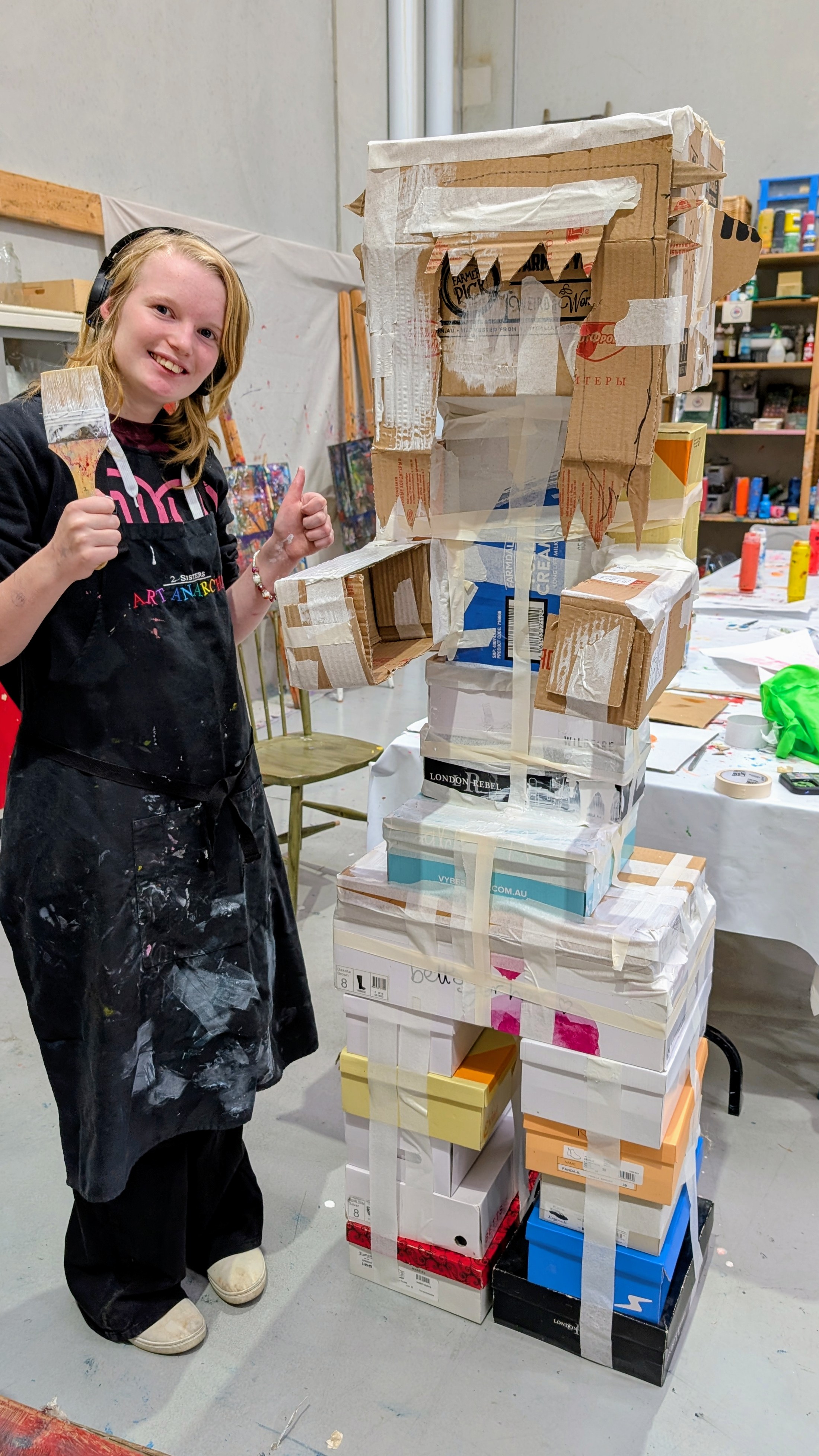
That moment, the confusion, then the realisation, then the grin is exactly why we do this.
We hear a lot right now about how much the next generation needs creativity. How important it is. How we need to teach it. And then we hand kids a step-by-step project and tell them what colour to use. Creative Makes exists in the gap between what we say we want for kids and what we actually give them space to do.
What “do whatever you want” actually looks like
It’s not chaos. There’s a whole system quietly holding it together.
For kids who find open choice overwhelming, and plenty do, there are two places they can head to independently. The prompt station has one-word prompts, colour ideas, reference cards, and other resources they can browse on their own. The bookshelf has two kinds of books: picture books chosen for their illustrations or their ideas (think: mistakes being good, trying new things), and art books for older kids who want to look at what other artists have done.
If that still doesn’t unlock something, that’s what the educators are there for. We’ll walk with them around the studio, have a look at what the other kids are making, because being in a room full of people creating is its own kind of inspiration, and ask some questions. What do you feel like doing? Are you leaning towards drawing, painting, collage, or construction? What are you into right now? Any favourite characters, video games, shows, books?
Kids don’t create in a vacuum. They pull from everything they love. Give them permission to do that in the studio, and ideas usually come pretty quickly.
What kids actually do with that freedom
Once they’re off, they’re really off.
Some kids come in with a full idea already formed in their heads. They walk through the door, they know exactly what they want to make, and they just go. These are the ones who work independently, barely come up for air, and produce something of a complexity that genuinely stops you in your tracks. The socialising happens, they’ll chat to the kid next to them, but they’re here for the art. Watching the joy on their faces while they work is
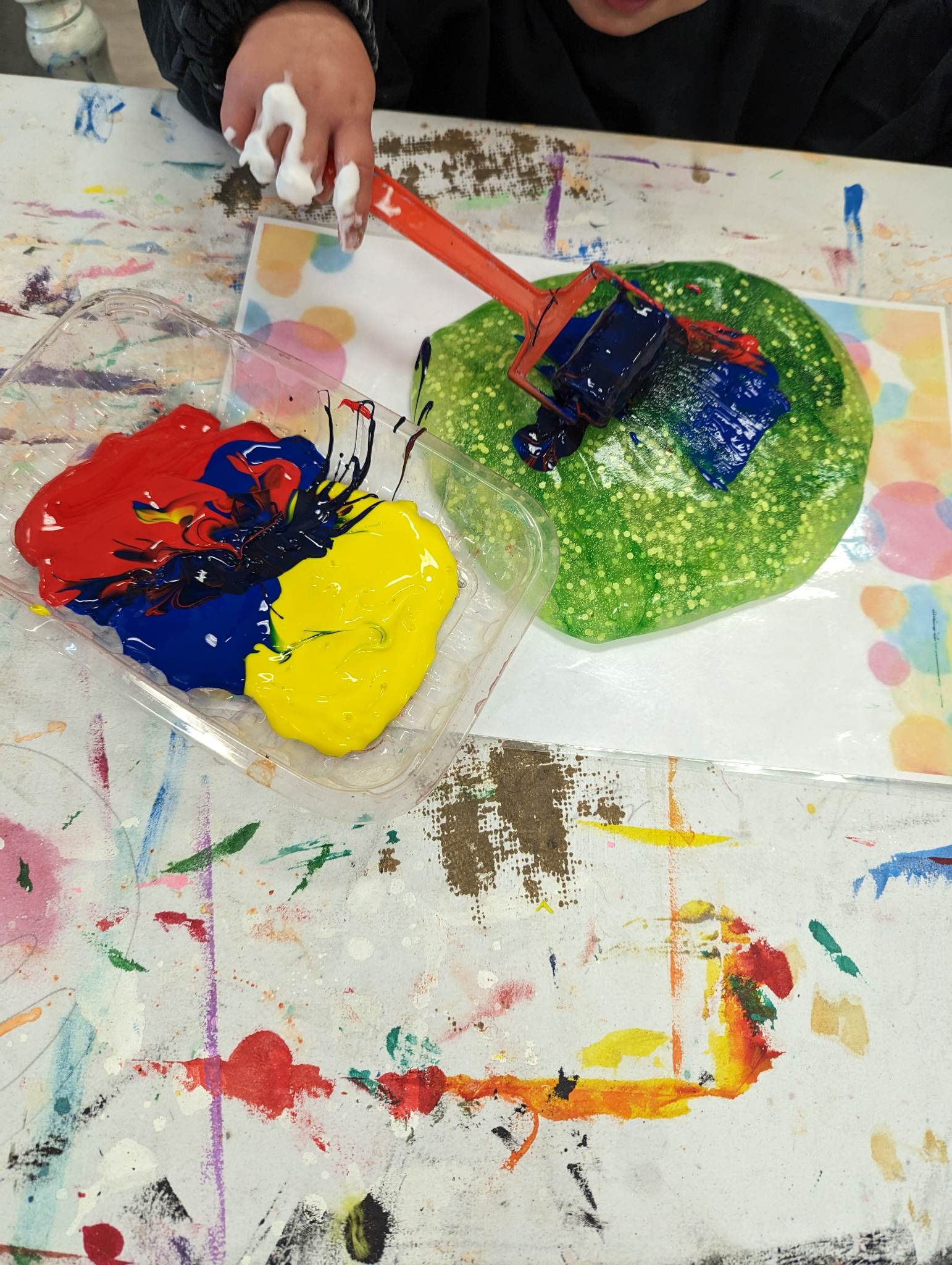
honestly the whole reason we do this.
Some kids do six, seven, eight different projects in a single session. They’re sampling everything, following curiosity from one thing to the next, building something, abandoning it, starting again. It looks scattered from the outside. It isn’t.
Some kids find the one thing they love and go deep. Particularly older kids, they’ll draw the same thing over and over, refining, asking questions, wanting feedback.
And some kids, especially when they realise nobody is going to tell them off, go straight for the sensory stuff. Hands in the paint. Paint up the arms. Paint on the face. Big, glorious, joyful mess. The kind they’re not allowed to make at school or at home. The grin that comes with it is enormous.
Every single one of these kids is doing something important. It just doesn’t always look like what we expect art to look like.
Why it doesn’t have to look good
Let’s be honest. Sometimes what comes home looks like a lot of paint went through a very exciting time.
Parents are often expecting a polished finished piece. Something frameable. Something that looks like art. And sometimes that’s what they get, but often it isn’t, and that’s not a problem.
Here’s what we ask parents to try instead of “What is that?”: Tell me about what you made.
What comes out of a child in that moment is something else entirely. A full backstory. Characters. A plot. Details about every single element on the page, some of which appear to have no relationship to what’s actually on the paper. The story develops, changes, and grows. It has nothing to do with whether the painting looks good and everything to do with what was happening in their head while they made it.
That’s the work. Not the product, the process.
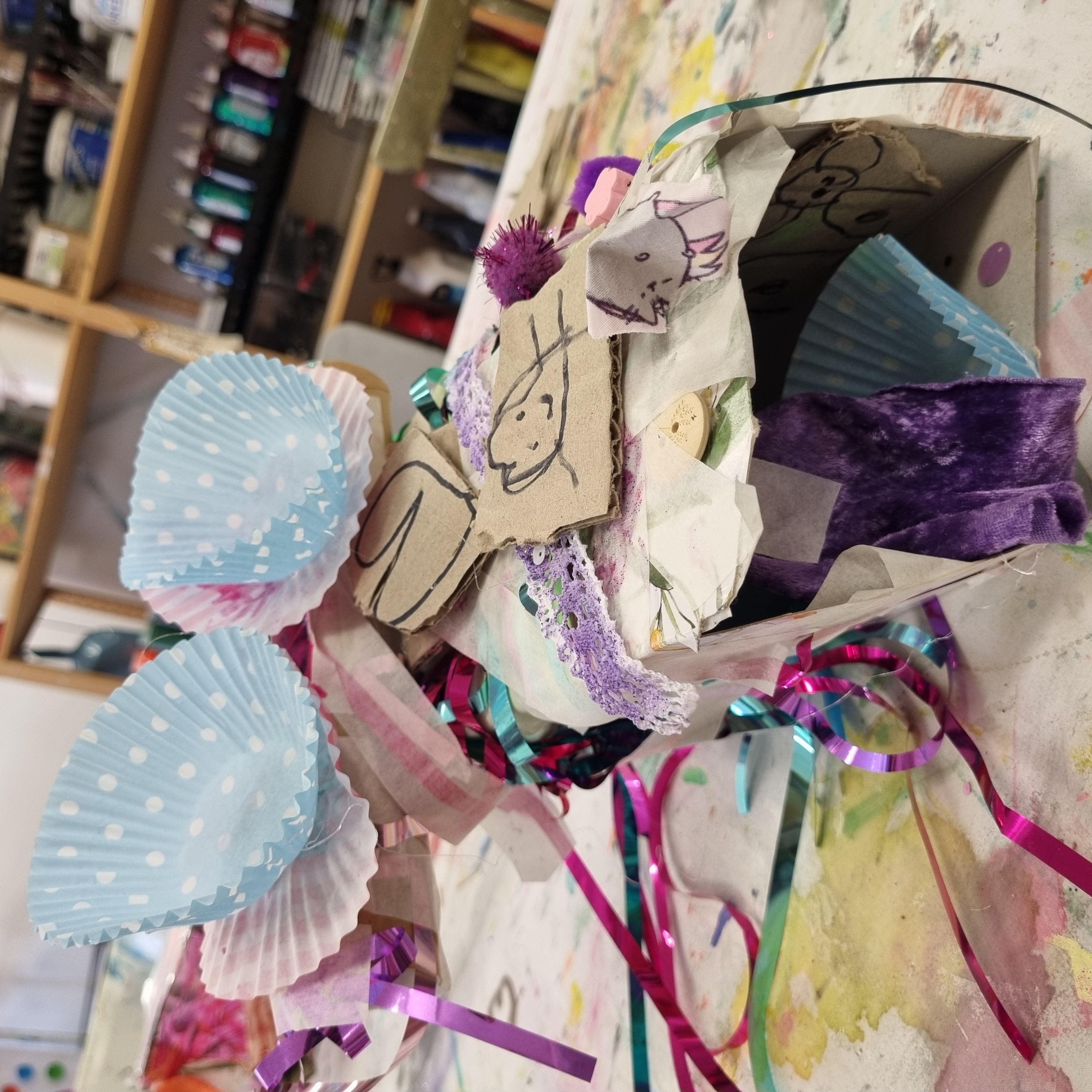
When a child is making something with no instructions and no right answer, they are problem-solving in real time. What happens when the paint bleeds? When the construction falls over? When the thing in their head doesn’t match what’s on the paper? They figure it out. They try something else. They recover. That’s resilience, not as a concept taught in a classroom, but as something they actually practise.
Research backs this up across all ages. Australia’s own arts agency, Creative Australia, published Next Generation Now (2025), a review of the evidence on arts engagement for children and young people, finding consistent outcomes including lower anxiety, increased resilience, greater confidence, and stronger social connections. For the science behind why process matters more than product, the NAEYC puts it plainly: the goal of art for children isn’t the finished pieceit’s the exploring, experimenting, and creating. For teens specifically, a 2023 study published in Nature found that adolescence is actually a critical window for developing creative thinking and socioemotional skills through art. The making matters. At every age.
The pride on a child’s face when they hand you something they made entirely on their own terms? That’s not nothing. That’s the whole point.
What art gives kids that other holiday activities don’t
Sport is great. Swimming lessons are important. We’re not here to argue with any of that.
But there are things that happen in an art studio that don’t happen anywhere else.
When a child is here, they’re in a room full of kids who get it, who also love making things, who are also following their own ideas, who aren’t going to look sideways at what someone else is creating. For a lot of kids, that’s a rare thing. Finding your people matters.
They’re also building skills they take home. Sometimes a piece isn’t finished in the
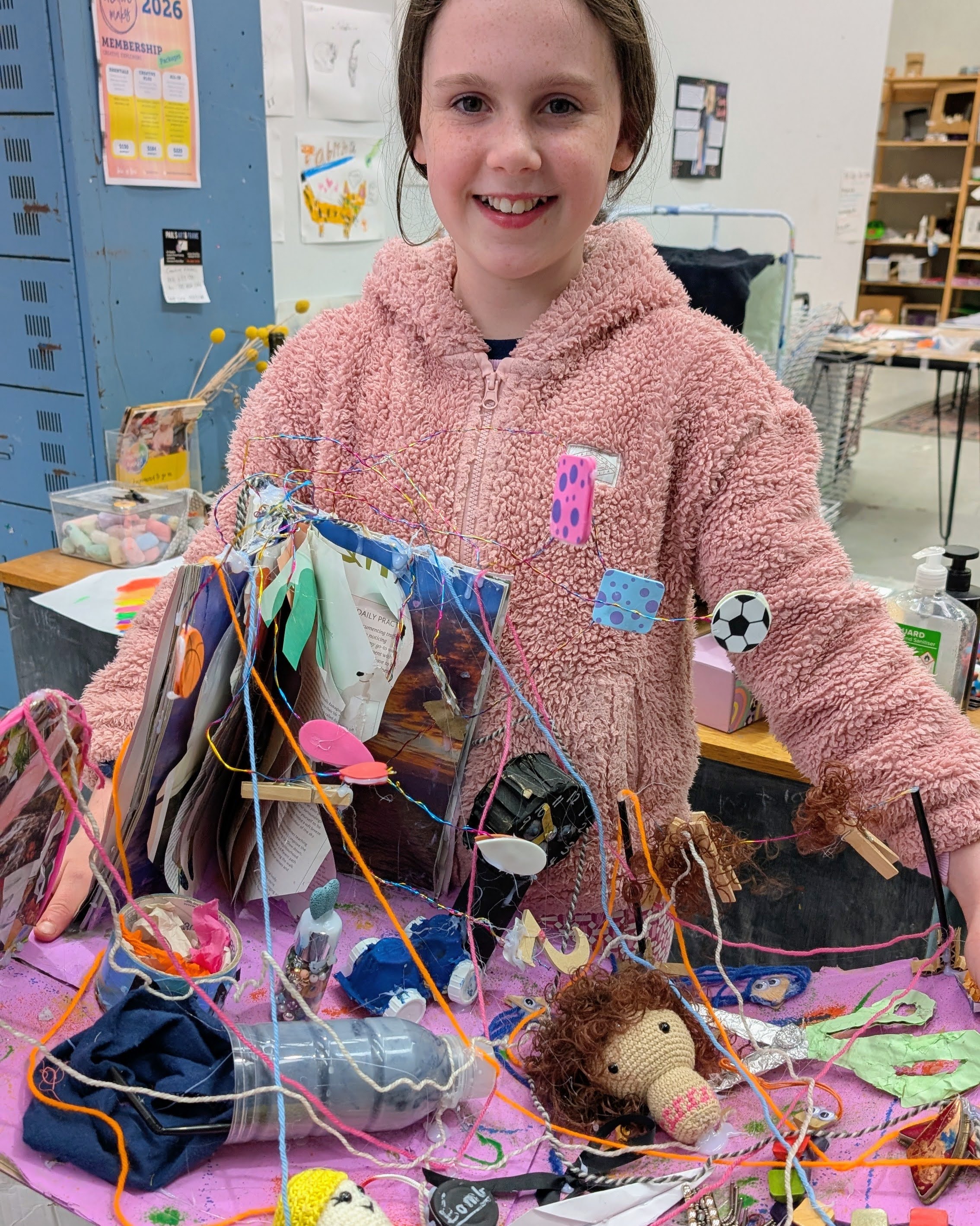
session, we encourage them to keep going at home, to not leave the idea behind just because the time ran out.
But more than any of that: every single child here makes something that only they could have made. Their idea, their choices, their execution. Nobody else in the room, nobody else in the world, would have made that exact thing.
We hear a lot about how much the next generation needs creativity. How essential it is. And we agree. But creativity isn’t something you can teach by telling kids what to do. It’s something that grows when you give kids the space to be exactly who they are, without instructions, without a right answer, without apology.
That’s what we’re here for.
Create as who you are. Boldly. Bravely. Freely. Fully. Unapologetically.
Come and see for yourself
School holidays are two weeks of no routine, no structure, and a lot of “I’m bored.” We’d like to suggest one session, or several, where your child gets to walk into a room, pick up whatever they want, and make something entirely their own.
No instructions. No right answer. No finished product that has to look a certain way.
Just a kid, a studio full of materials, and the very good chance that they’ll come home covered in paint and absolutely delighted with themselves.
We have workshops running from Monday 29 June across both weeks of the holidays, themed 2-hour sessions in the morning and afternoon, plus shorter 1-hour mini sessions for younger makers. Something for every age, every kind of kid.
Book your spot here
Spots don’t last forever. And neither do school holidays, thankfully.