What Good Art Teaching Actually Looks Like | Creative Makes Hastings
“If you find a path with no obstacles, it probably doesn't lead anywhere.” — Frank A.Clark
What Good Art Teaching Actually Looks Like, And Why It Doesn't Look Like Teaching
The most important thing a great art teacher does is also the hardest. It's knowing when to step back
The moment visitors find surprising
There's a moment that happens in our studio that visitors sometimes find surprising.
A child is stuck. They're staring at their work. They look up. And the teacher, rather than jumping in with a solution, asks a question.
'What do you think you could try?'
Sometimes there's a pause. Sometimes a frown. And then, almost always, something shifts. The child looks back at their work with new eyes, picks up a brush, and tries something.
It might work. It might not. But either way, something important just happened. And it didn't come from the teacher. It came from the child.
The instinct to help, and why we resist it
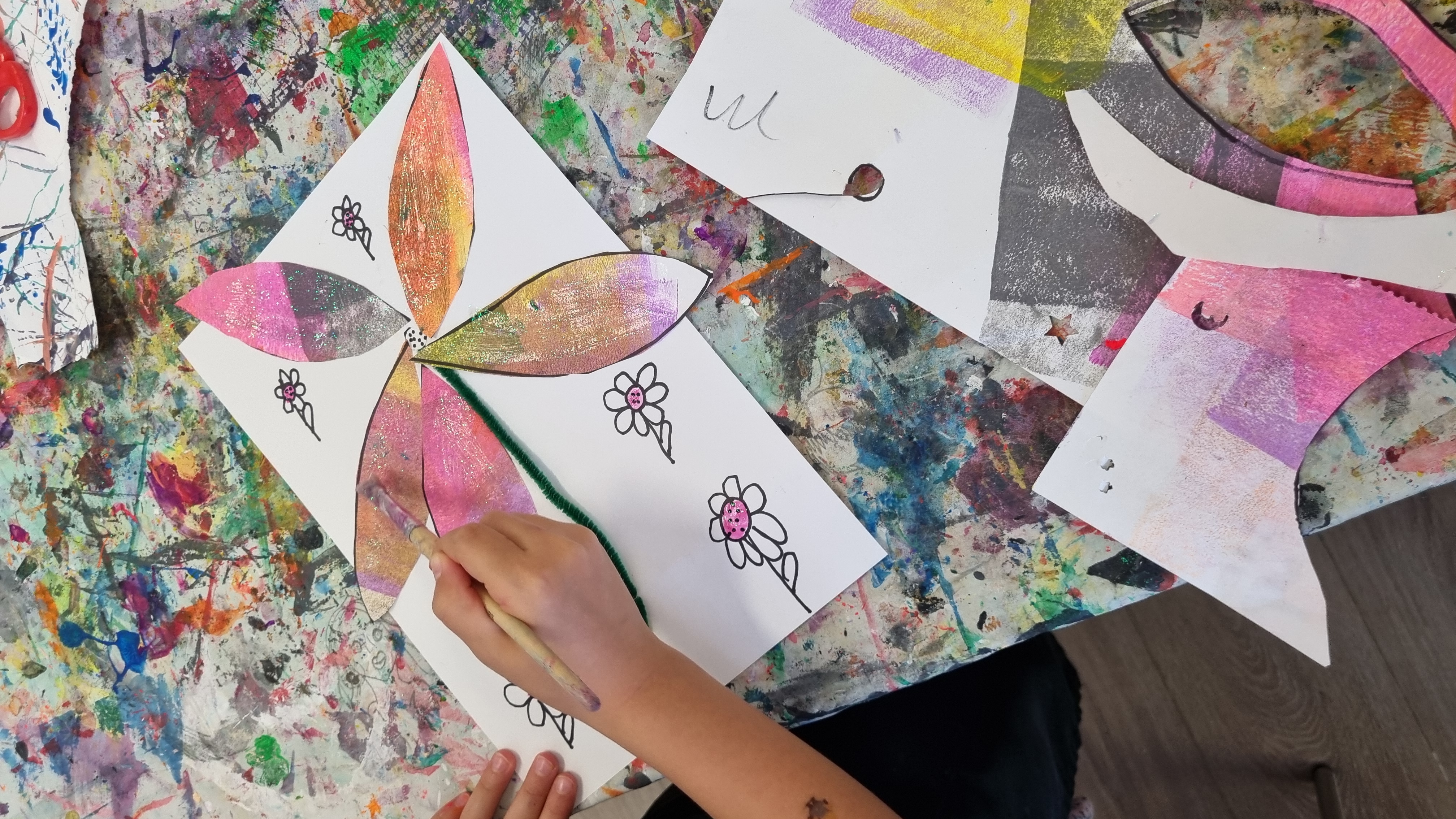
When a child is struggling, every adult instinct says: step in. Fix it. Show them how. It feels kind. It feels efficient. It feels like teaching.
But here's what we know about creativity: when an adult takes over the problem, the child stops thinking about it. The thinking, the most valuable part, gets handed away.
At Creative Makes, we make a deliberate, intentional choice to resist that instinct. Not because we don't care. Because we care deeply about what our students are actually building.
We teach skills. We support ideas. We guide and encourage. We are just very intentional about when we step in, because stepping in too soon takes away the thinking.
This is the heart of what separates process-based art teaching from instruction-led art classes. One produces a finished product. The other produces a thinker.
What we do instead
Our role in the studio is to create the conditions for creative thinking, not to direct it. That looks like:
Asking questions instead of giving answers: 'What could you try next?' 'What's happening here?' 'What do you want this to feel like?'
Noticing effort and decision-making, not just outcomes: 'I can see you're really thinking about this.'
Offering skills and techniques as tools, not instructions: teaching how to blend colour, then stepping back to let the child decide what to do with that knowledge
Holding space for struggle: staying close, staying calm, and trusting that the discomfort of not-knowing-yet is part of the process
Celebrating what's unexpected: because in art, the accident is often the most interesting thing
None of this is passive. It requires enormous skill, presence and attentiveness. It is teaching. Just not the kind most people recognise as such.
What the research says
We're not the only ones who think this way.
Professor Robyn Ewing AM from the University of Sydney has spent decades examining the impact of arts education on children. Her research found that quality creative
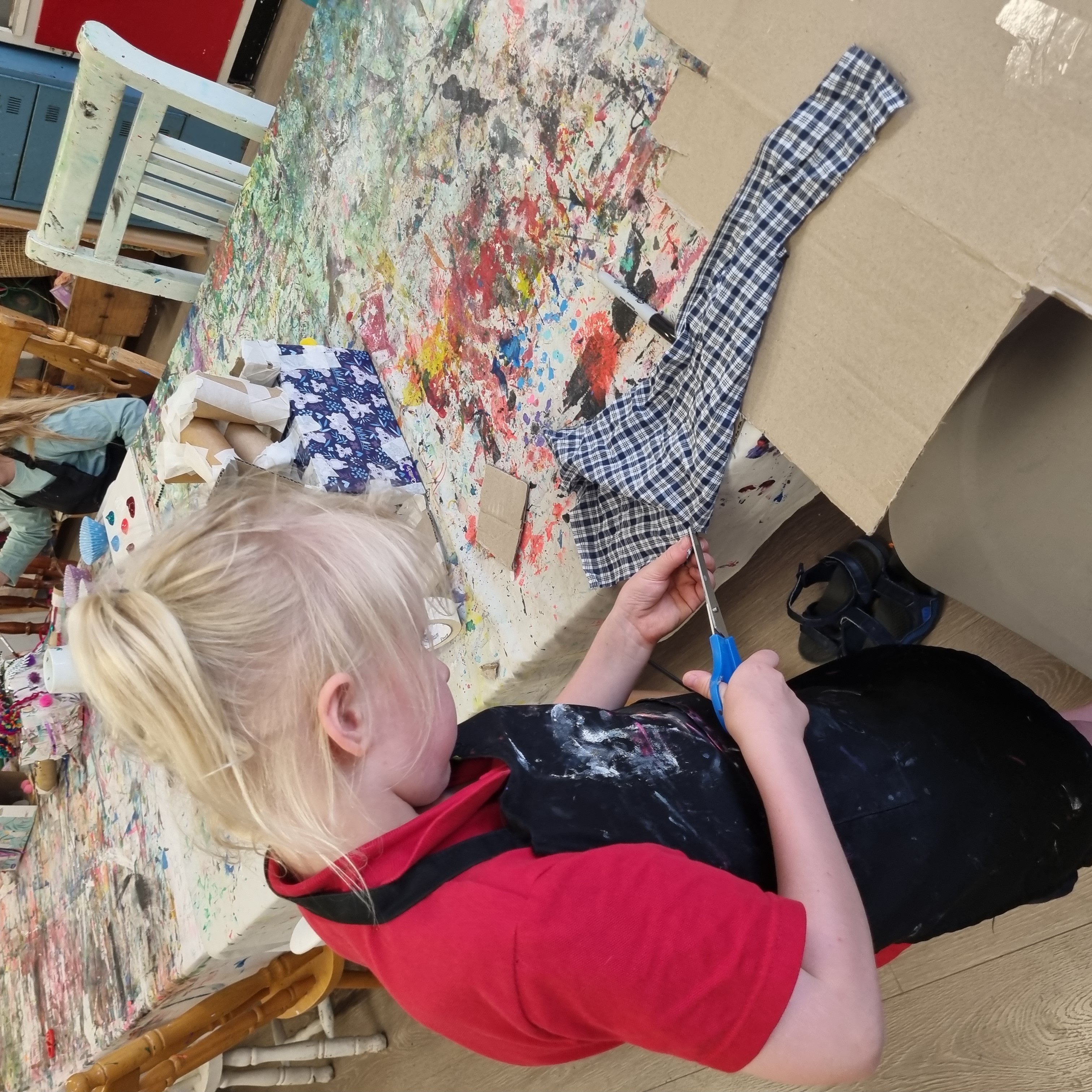
experiences build confidence, self-understanding, and the capacity to figure things out, and that those skills travel well beyond the art room. (Her full research review is here)
A 2024 review by University of Sydney researchers found that it's the process of creating, not the finished product on the wall, where the real growth happens for children. Active engagement in art builds confidence, emotional expression, and self-esteem. (You can read that review here)
Creative Australia's research on arts and wellbeing found that creative participation gives children a sense of control over their own lives, builds skills and self-confidence, and actively encourages brain development. (That paper is here)
And there's a growing body of research on what educators call productive struggle, the idea that when children work through difficulty without an adult jumping in, they understand more deeply, bounce back more readily, and become more confident over time. The discomfort of not knowing yet isn't a problem to be solved. It's where the learning lives. (More on that here)
So when you see your child sitting quietly with their work, not quite sure what to do next, that moment has a name. And it matters more than it might look like from the window.
Why this matters for your child
Children who are taught to think for themselves creatively develop something that no amount of directed instruction can produce: creative confidence.
The belief that they have good ideas. That their instincts are worth following. That when they don't know what to do, they can figure it out.
That confidence travels. It shows up in how they approach problems at school. In how they handle uncertainty. In how they respond when something doesn't go to plan.
And it starts with a teacher who trusts them enough to ask a question instead of giving an answer.
What you're actually seeing through the window
If you look through the window of our studio and see a child staring at their work while a teacher watches quietly nearby, know that you are seeing great teaching in action.
The teacher is not ignoring the child. They are holding the space for that child to find their own way through.
And when they do, and they always do eventually, the pride on their face is something a directed outcome can never produce.
Because it came from them.
Create as who you are. Boldly. Bravely. Freely. Fully. Unapologetically.
Come and see this philosophy in action
Creative Makes is a process-based art studio for children and adults in Hastings, on Victoria's Mornington Peninsula. We'd love to welcome your family.
Book a class at https://creativemakes.com.au/home