Why Your Child Says ‘I’m Not Creative’ — And Why They’re Wrong | Creative Makes Hastings
“If parents want to give their children a gift, the best thing they can do is to teach their children to love challenges, be intrigued by mistakes, enjoy effort, and keep on learning. That way, their children don't have to be slaves of praise. They will have a lifelong way to build and repair their own confidence.” — Carol S. Dweck, Mindset: The New Psychology of Success
Why Your Child Says ‘I’m Not Creative’ - And Why They’re Wrong
Creativity isn’t a talent you’re born with. It’s a capacity you grow. Here’s how we help your child find it.
Something shifts between four and twelve
Ask a room full of four-year-olds if they’re creative, and every hand shoots up. Ask the same question at twelve, and most of them look at the floor.
What happened?
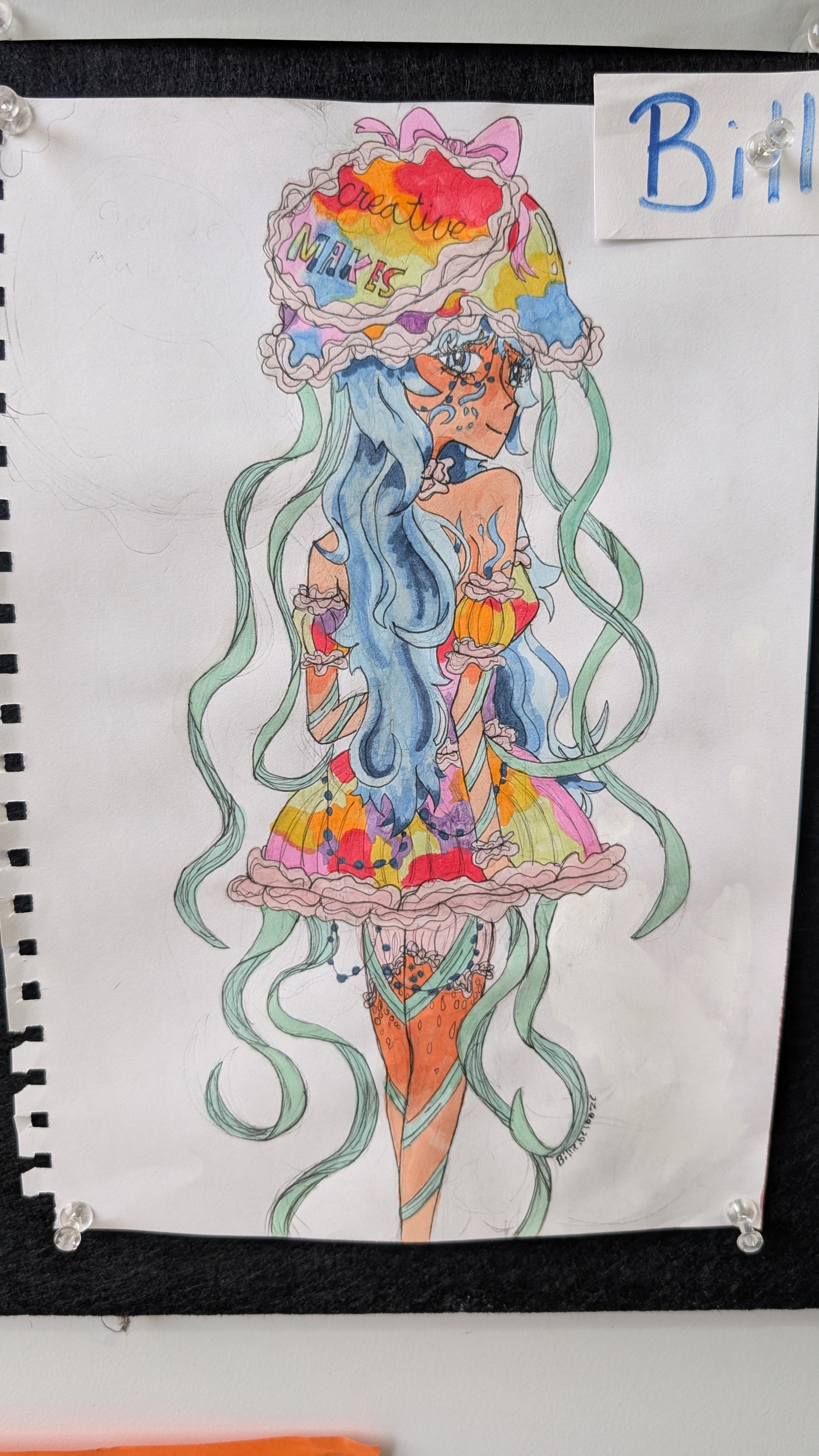
It wasn’t that they lost their creativity. It was that they learned, through comparison, correction, and the gradual accumulation of ‘that’s not quite right’, that creativity is a talent some people have, and others don’t.
Research backs this up. Psychologist Kyung Hee Kim analysed over 300,000 creativity test scores and found a significant decline in creative thinking among school-aged children, with the most pronounced drops occurring between kindergarten and sixth grade. Creativity scores had been rising steadily until 1990, after which they began a consistent downward trend. A Stanford neuroscience study found that this slump can begin as early as ages eight to ten, and that it’s linked to increased social conformity and the pressure to perform correctly.
At Creative Makes, our children’s art studio on the Mornington Peninsula, we spend a lot of time gently, patiently dismantling that belief. Because it isn’t true. And the research agrees.
The myth of the ‘creative type’
For a long time, creativity was treated as a fixed trait: something you either had or you didn’t. Like being tall. Like having perfect pitch.
But that understanding has shifted significantly. Psychologist Carol Dweck’s foundational research on growth mindset showed that intelligence and ability are not fixed: they develop with practice, effort and the right environment. And creativity is no different.
Creativity is not a talent. It is a skill. And like any skill, it can be learned, practised and grown.
The children who say ‘I’m not creative’ don’t lack creativity. They lack a space where their particular kind of creativity has been welcomed.
That’s an important distinction. Because the solution isn’t to tell a child they’re creative. It’s to give them an environment where they can discover it for themselves.
Why comparison is creativity’s biggest enemy
Most children arrive at the conclusion that they’re not creative through comparison. They look at another child’s artwork and see something that looks more like the thing it was supposed to be. They hear praise directed at someone else’s work. They notice that what they made doesn’t look like the example on the wall.
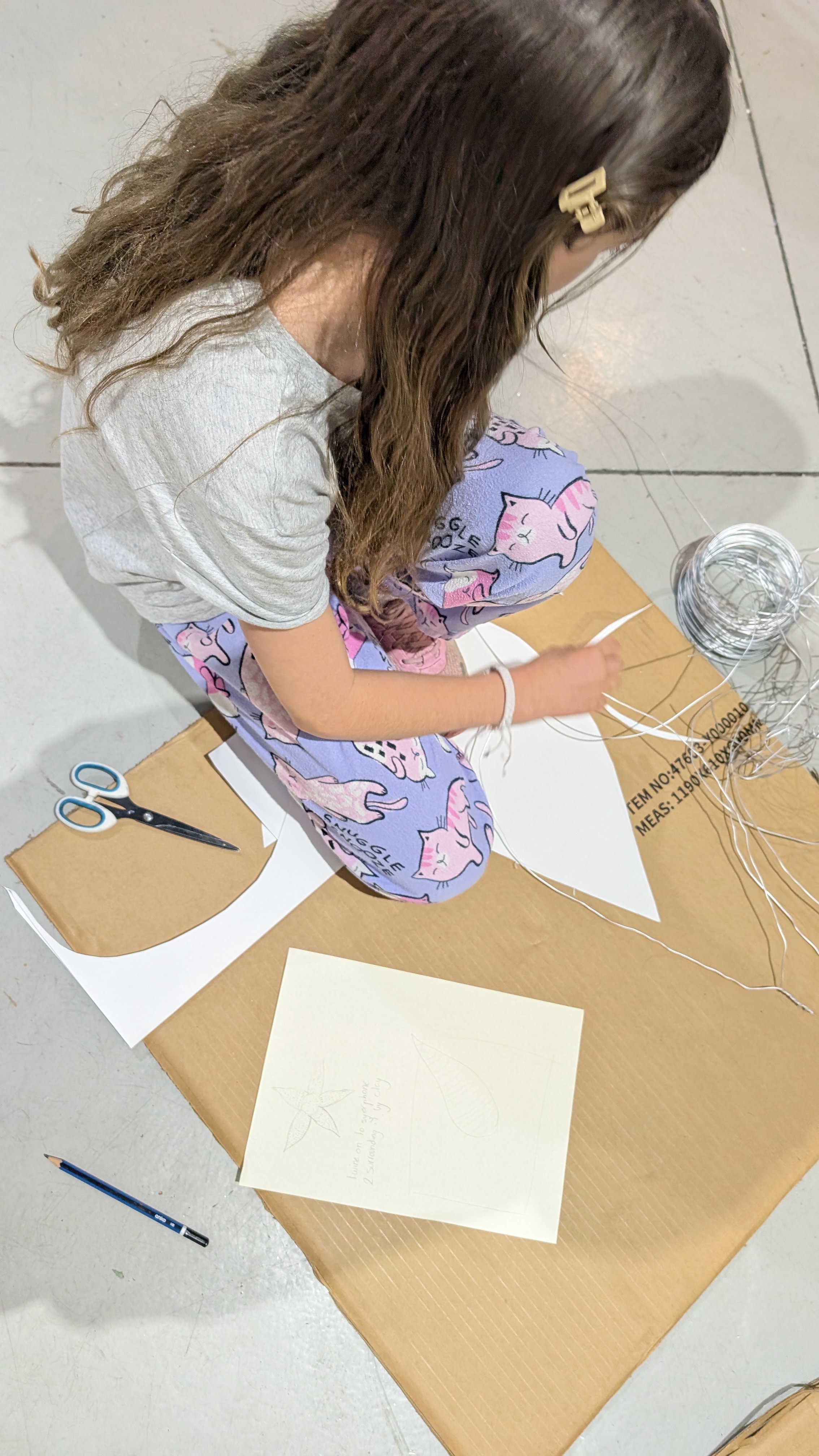
And they conclude: I’m not good at this.
In a process-based studio, we remove the conditions that allow that conclusion to form. There are no examples to replicate. There is no ‘right’ outcome to compare against. Every child is working from their own ideas, in their own way, toward their own outcome.
When there’s nothing to measure yourself against, the comparison disappears. And when comparison disappears, creativity has room to surface.
What we see happen when the pressure comes off
Time and again, we see children arrive at Creative Makes having already decided they’re not creative. They hold the pencil carefully. They look around before they start. They ask: ‘Is this right?’
And then, gradually, sometimes in a single session, sometimes over several weeks, something loosens.
They stop looking around. They start making decisions. They get absorbed. They try things without asking for permission first. They make a mess without apologising for it.
They are creative. They always were. They just needed a space where that was allowed to be true.
What you can do as a parent
Dweck’s research found something that matters enormously for parents: the way we talk to children about their creative work shapes the beliefs they form about themselves. She writes:
“If parents want to give their children a gift, the best thing they can do is to teach their children to love challenges, be intrigued by mistakes, enjoy effort, and keep on learning. That way, their children don’t have to be slaves of praise. They will have a lifelong way to build and repair their own confidence.”
— Carol S. Dweck, Mindset: The New Psychology of Success
Here are a few simple language shifts that can make a real difference:
Instead of ‘That’s beautiful’, try ‘Tell me about it.’ It puts the meaning in their hands, not yours.
Instead of ‘You’re so talented’, try ‘You worked really hard on that.’ It reinforces effort over fixed ability.
Instead of ‘What is it supposed to be?’, try saying nothing. Or: ‘What was your favourite part of making this?’
When they say ‘I can’t do it’, try: ‘You can’t do it yet. What could you try first?’
Small shifts. Big difference over time.
And if your child has already decided they’re not creative, bring them to us. We’ve seen this story change more times than we can count.
Create as who you are. Boldly. Bravely. Freely. Fully. Unapologetically.
We’d love to show them otherwise
Creative Makes is a process-based art studio in Hastings on Victoria’s Mornington Peninsula, for children aged 5–16 and adults. Open studio days and weekly classes available.
If your child has ever said ‘I’m not creative’, we’d love to show them otherwise.
Book a class at creativemakes.com.au